MiniMed Champion reviews the Instinct sensor, made by Abbott
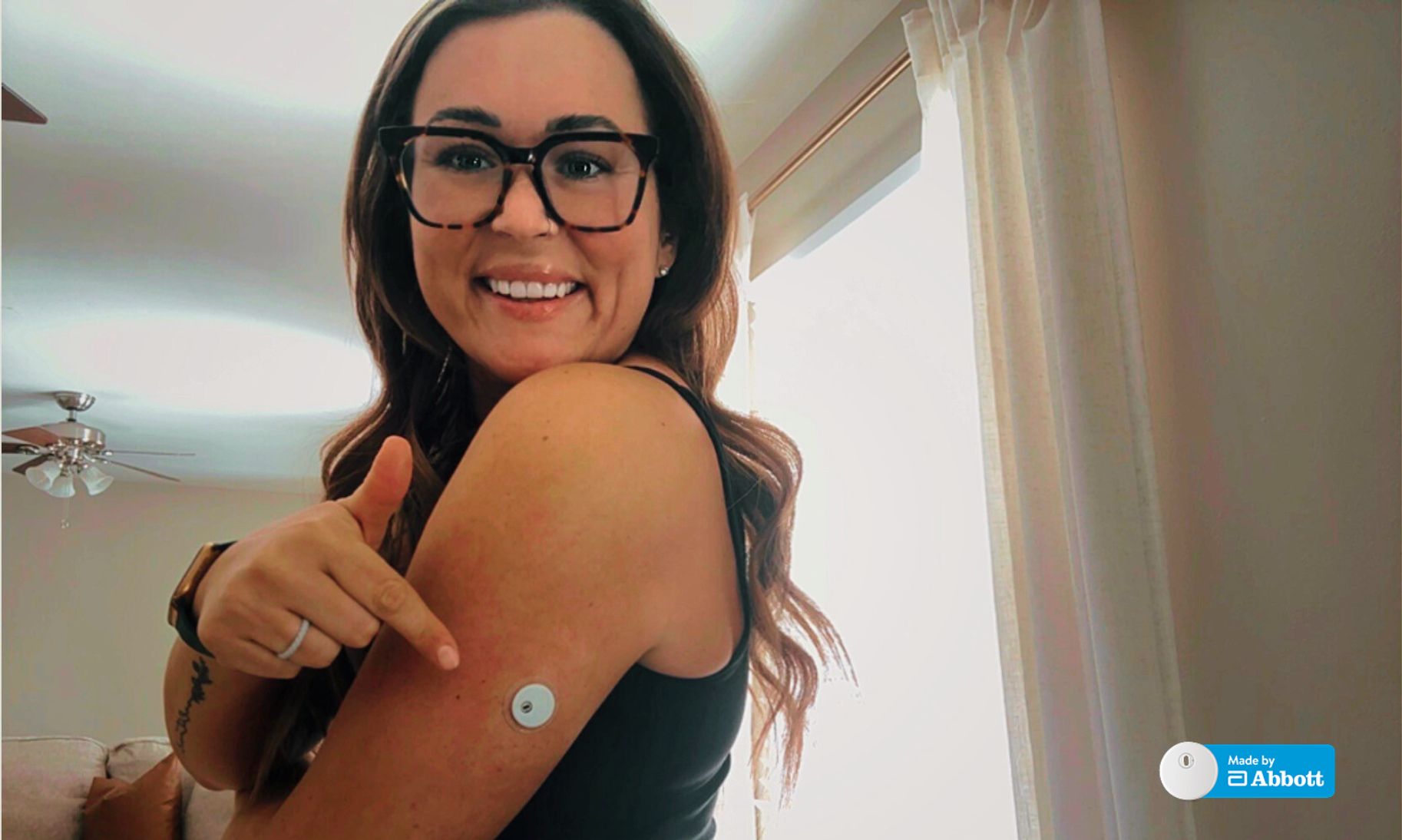
My name is Almedina, and I was diagnosed with diabetes in 2004.
Some days, diabetes fades into the background — quiet, manageable, almost forgettable. Other days, it becomes the loudest thing in the room, both figuratively and literally. If you’re part of the Medtronic world like me, you know exactly what I mean. Those alarms certainly know how to make an entrance.
What it was like before the Instinct sensor
Over the years, I’ve learned that managing diabetes is as much about adaptability as it is about technology. I previously used the MiniMed™ 780G system with the Guardian™ 4 sensor. While it was a valuable tool in helping keep my glucose in range,† it wasn’t without its challenges.
The sensor itself felt bulky, and changing it often turned into a time-consuming process. On top of that, the adhesive didn’t work well for my skin. I often had to rely on backup patches just to make it to the full seven days.
One of the biggest difficulties, however, was placement. I primarily wore my sensor on the back of my arms, which made it difficult to insert without help.
How the Instinct sensor improved my experience
When I learned that new sensor options were being introduced, I was immediately excited — especially knowing they would be easier for me to put on by myself. This independence was incredibly important to me, and it’s something the Instinct sensor has truly delivered on. Being able to apply my sensor more easily by myself has brought a sense of freedom and relief I didn’t realize I was missing.
Favorite features
The Instinct sensor is refreshingly simple, and doesn't need to be charged.
Its small, sleek, and discreet design makes it far less noticeable, and the fact that it lays flat is amazing.
I also appreciate that I don’t need additional patches to keep it secure. The first time I wore it without extra adhesive, I noticed the edges lifting slightly. Since then, I’ve used Skin-Tac before application, which has worked beautifully. Most importantly, since starting the sensor, it has stayed on for 14-15 days — an incredible improvement and one of my favorite features.
Another standout difference has been how quickly and seamlessly the sensor connects to my pump. It now takes less than five seconds to connect! I also appreciate how my sensor readings closely match my fingerstick readings, giving me greater confidence in the data I rely on daily.
Opportunities for improvement
If I could suggest improvements, I would love the option of a stronger adhesive, especially for extended time in water. I love being near and in the water‡ during summers and vacations, and that’s always been a concern for me. Additionally, more skin-tone color options would be a wonderful enhancement, allowing the sensor to blend in even more with its already subtle design.
TL;DR
Overall, the Instinct sensor has been an incredible addition to my MiniMed™ 780G system. The sensor is simpler and smaller than the Guardian™ 4 sensor. I love that I can easily apply it myself and it lasts up to 15 days.
The ease, reliability, and independence it provides have meaningfully improved my day-to-day life — and I truly can’t rave enough about its design or the simplicity of being able to put it on myself.
Guest writer: Almedina Ibradzic
Footnotes
† Refers to SmartGuard™ technology. Individual results may vary.
‡ At the time of manufacture and when the reservoir and tubing are properly inserted, your pump is waterproof. It is protected against the effects of being underwater to a depth of up to 8 feet (2.4 meters) for up to 30 minutes. This is classified as IPX8 rating. See user guide for more details. The Instinct sensor is water-resistant up to 3 feet (1 meter) for up to 30 minutes. Do not immerse the sensor for longer than 30 minutes. CGM readings may not be transmitted from the CGM to the pump while in water.
Important Safety Information: MiniMed™ 780G system with SmartGuard™ technology with Instinct sensor, Simplera Sync™ sensor, and Guardian™ 4 sensor
The MiniMed™ 780G system is intended for the continuous delivery of basal insulin at selectable rates and the administration of insulin boluses at selectable rates for the management of type 1 diabetes mellitus in persons 7 years of age and older, and of type 2 diabetes mellitus in persons 18 years of age and older requiring insulin. The system is also intended to continuously monitor glucose vales in the fluid under the skin.
The MiniMed™ 780G System includes SmartGuard™ technology, which can be programmed to automatically adjust insulin delivery based on the continuous glucose monitoring (CGM) sensor glucose values and can suspend delivery of insulin when the sensor glucose (SG) value falls below or is predicted to fall below predefined threshold values. The system is intended for use with connected sensors, including the Simplera Sync™ and Guardian™ 4 sensors and integrated continuous glucose monitors, including the Instinct sensor, each of which has different wear-time, form factor, insertion site, and other distinguishing characteristics that relate to sensor performance. Consult the appropriate sensor user guide when using the system. Discuss treatment decisions with your HCP.
WARNING: Do not use the SmartGuard™ feature for people who require less than 8 units or more than 250 units of total daily insulin per day. A total daily dose of at least 8 units, but no more than 250 units, is required to operate in the SmartGuard™ feature. |
WARNING: Do not use the MiniMed™ 780G system until appropriate training has been received from a healthcare professional. Training is essential to ensure the safe use of the MiniMed™ 780G system.
WARNING: Do not use SG values to make treatment decisions, including delivering a bolus, while the pump is in Manual Mode. When the SmartGuard™ feature is active and you are no longer in Manual Mode, the pump uses an SG value, when available, to calculate a bolus amount. However, if your symptoms do not match the SG value, use a blood glucose (BG) meter to confirm the SG value. Failure to confirm glucose levels when your symptoms do not match the SG value can result in the infusion of too much or too little insulin, which may cause hypoglycemia or hyperglycemia.
Pump therapy is not recommended for people whose vision or hearing does not allow for the recognition of pump signals, alerts, or alarms. The safety of the MiniMed™ 780G system has not been studied in pregnant women or in persons using other anti-hyperglycemic therapies that do not include insulin. For complete details of the system, including accessories and additional important safety information concerning indications, contraindications, warnings and precautions associated with the system and its components, please consult https://www.medtronicdiabetes.com/important-safety-information and the appropriate user guides at https://www.medtronicdiabetes.com/download-library.
Related Articles


About Author

LOOP Blog Editorial
Medtronic DiabetesMedtronic Diabetes is dedicated to helping people get more out of life by creating innovative technologies and providing extraordinary support so you can manage diabetes on your own terms.